
LED Track Lighting: 230V vs. 48V Systems


-
GLOBE P LED Tracklight 48V 5W CCT Philips Hue - Zigbee Dimmable White
In stockRegular price €124,39 EURRegular price -
GLOBE P LED Track Spotlight 48V 5W CCT Black
In stockRegular price €72,99 EURRegular price -
GLOBE P LED Tracklight 48V 5W CCT White
In stockRegular price €72,99 EURRegular price -
GLOBE P LED Stromschienenstrahler 48V 5W Warmweiß DALI Dimmbar Schwarz blendfrei
In stockRegular price €222,99 EURRegular price -
GLOBE P LED Stromschienenstrahler 48V 5W Warmweiß DALI Dimmbar Weiß blendfrei
In stockRegular price €222,99 EURRegular price -
GLOBE P LED Track Spotlight 48V 5W Warm White Black
In stockRegular price €52,79 EURRegular price -
GLOBE P LED Track Light 48V 6W CCT Philips Hue - Zigbee Dimmable Black
In stockRegular price €127,09 EURRegular price -
GRID L LED Stromschienenstrahler 48V 12W 25° CCT DALI Dimmbar Schwarz
In stockRegular price €242,19 EURRegular price -
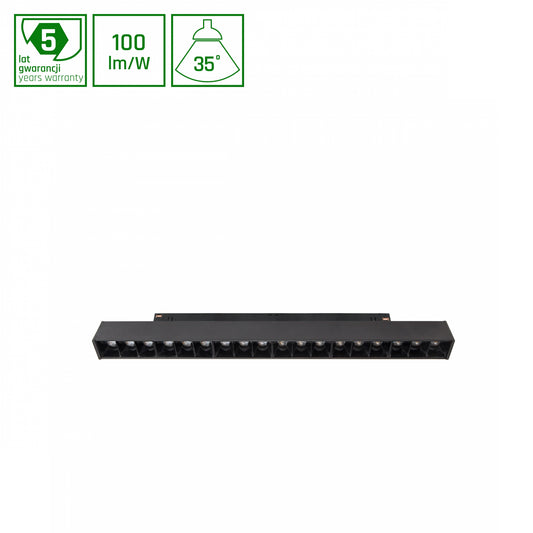
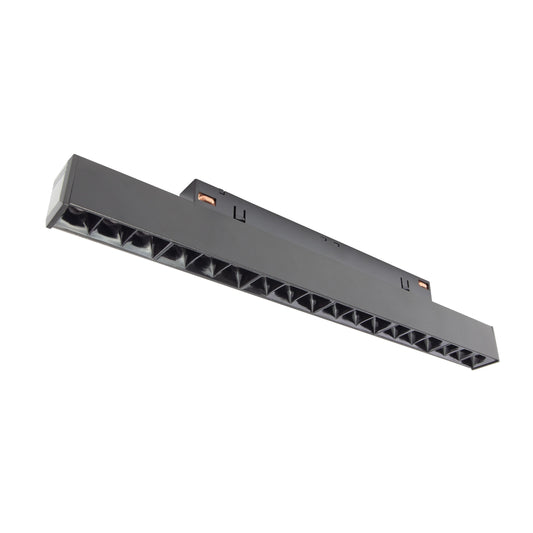
GRID L LED Track Spotlight 48V 22W 35° CCT UGR<19 Glare-free Black
In stockRegular price €49,90 EURRegular price -
Grid L LED track light 48V 22W 35° CCT UGR<19 Anti-glare White
In stockRegular price €39,90 EURRegular price -
GRID L LED Stromschienenstrahler 48V 22W 35° Warmweiß DALI Dimmbar Schwarz
In stockRegular price €239,09 EURRegular price -
GRID L LED Stromschienenstrahler 48V 22W 35° Warmweiß DALI Dimmbar Weiß
In stockRegular price €239,09 EURRegular price -
GRID L LED Track Spotlight 48V 440cm 22W 40° CCT Philips Hue - Zigbee UGR<19 Anti-Glare White
In stockRegular price €79,90 EURRegular price -
GRID L LED Tracklight 48V 440cm 24W 40° CCT Philips Hue - Zigbee UGR<19 Glare-free Black
In stockRegular price €79,90 EURRegular price -
GRID M LED Tracklight 48V 17W 35° CCT Philips Hue - Zigbee UGR<19 Glare-Free White
In stockRegular price €69,90 EURRegular price -
GRID M LED Track Light 48V 17W 35° CCT UGR<19 Anti-glare Black
In stockRegular price €39,90 EURRegular price -
GRID M LED Tracklight 48V 17W 35° CCT UGR<19 Glare-free White
In stockRegular price €29,90 EURRegular price -
GRID M LED Stromschienenstrahler 48V 17W 35° Warmweiß DALI Dimmbar Schwarz blendfrei
In stockRegular price €223,19 EURRegular price -
GRID M LED Stromschienenstrahler 48V 17W 35° Warmweiß DALI Dimmbar Weiß blendfrei
In stockRegular price €223,19 EURRegular price -
GRID M LED Tracklight 48V 17W 35° Warm White Black 2-Circuit Glare-Free
In stockRegular price €68,79 EURRegular price









Frequently Asked Questions
What is the difference between a 230V and a 48V LED track lighting system?
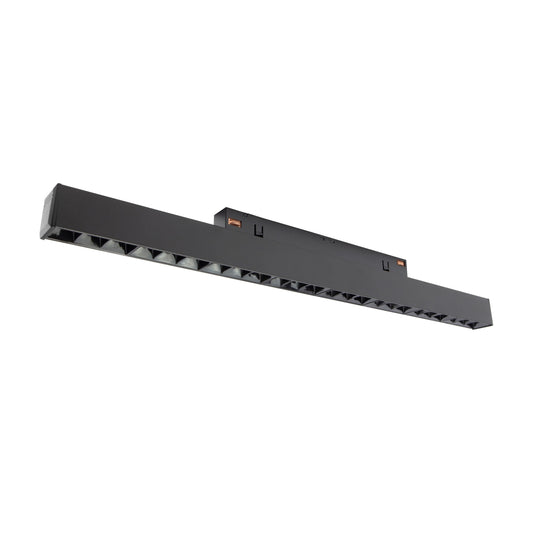
The main difference lies in the technology and design: 230V 3-phase track systems are connected directly to the mains without a transformer. They are extremely robust, highly resilient, and allow three different lamp groups to be switched separately on one track. 48V low-voltage track systems use safe low-voltage technology via a transformer. They are significantly slimmer, appear more minimalistic, and the spotlights can be easily clicked in and moved magnetically without tools.
Which components do I need for a complete track lighting system?
For a functioning track lighting system, you need at least four basic components: a power feed (the power connection), the tracks themselves, end caps for a safe and clean finish, and the appropriate track spotlights. If you are planning curves or longer runs, you will also need the corresponding connectors (L-connectors, T-connectors, or linear connectors). For 48V systems, a suitable power supply (transformer) is also mandatory.
Can I flexibly shorten or extend the rails?
Yes, a modern track lighting system is completely modular. Both the 230V and 48V tracks can be easily cut to the desired length with a fine metal saw. Thanks to a variety of connectors, the system can be expanded infinitely and precisely adapted to the architecture of your room – whether straight lines, L-shapes, or intricate layouts.
Are the LED lamps for track systems dimmable?
Many of our RIMCLED track lighting fixtures are dimmable, but this depends on the model chosen. For classic 230V 3-phase systems, dimming usually occurs via leading-edge or trailing-edge dimmers in the wall installation or via smart DALI systems. In modern 48V low-voltage systems, brightness is often controlled digitally via radio, a remote control, an app, or smart home standards (such as ZigBee).
How many ceiling lights can I operate on a track system?
In a 230V system, the total capacity of your household or commercial fuse is the limiting factor (at 16 amps, this is theoretically up to 3,600 watts). Since modern LED spotlights are extremely energy-efficient, you can often operate well over 50 to 100 spotlights on a single power feed. In a 48V low-voltage system, the wattage of the transformer used (e.g., 150W or 200W) determines the limit for the number of installed lamps.
🛠️ Installation Overview: Which system suits your project?
Collection: rail system
Individually configurable ceiling lights in track systems
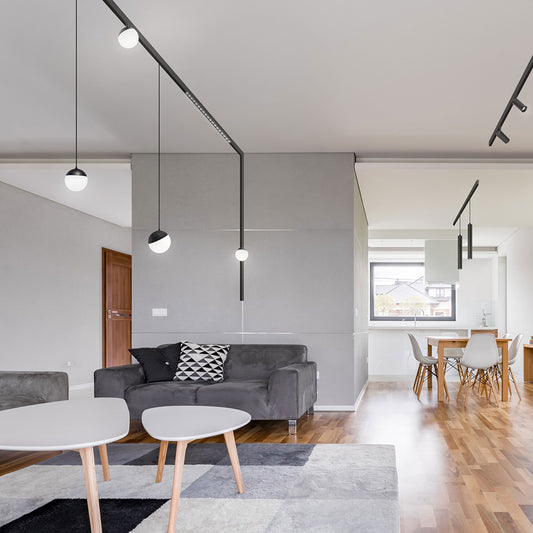
A modern LED track lighting system is the ultimate solution for sophisticated lighting architecture in residential and commercial spaces. To meet every structural requirement, we offer both heavy-duty 230V 3-phase systems and delicate 48V low-voltage track systems. While the 230V mains voltage offers the invaluable advantage of operating without voltage drop or an additional transformer even with extremely long track sections, low-voltage tracks score points with their particularly slim, unobtrusive design and safe handling in the low-voltage range.
Both system variants can be expanded completely modularly and adapted precisely to any floor plan. Whether it's a perfectly straight line in the hallway, generous L-shapes in the showroom, or complex T- and X-connections on commercial sales floors – with the right accessories, you can design your track lighting system freely. Our rotatable and swiveling track spotlights always give you full control: use bundled beam angles for targeted accent lighting of products or wide-beam modules for absolutely uniform general lighting of workplaces.
Energy-efficient LED track lighting systems at a professional level
All RIMCLED lamps for track systems – whether for high-voltage or low-voltage operation – are uncompromisingly designed for continuous use in commercial and residential areas. We consistently rely on state-of-the-art LED technology with high luminous efficacy (lumens per watt) and excellent color rendering (CRI >90). This ensures that colors of clothing, food, or artworks appear absolutely true to life, three-dimensional, and brilliant. In addition, the long-lasting LED drivers sustainably reduce your electricity costs during operation and minimize maintenance efforts and expensive downtimes.
Depending on the desired room atmosphere and intended use, you can flexibly choose between different color temperatures: from cozy, inviting warm white (3000K) to concentration-promoting neutral white (4000K) for offices and practices, to daylight-like cool white (6000K) for workshops and laboratories.
Versatile Control: 230V 3-Phase or 48V Low-Voltage
The biggest advantage of professional track lighting is the tailored adaptation to your individual switching and control wishes. With our 230V ceiling lights, you benefit from the mechanical three-phase selection directly on the spotlight adapter. Via a simple rotary switch, you can assign each lamp to one of three separately switchable light groups in no time. This way, you control different lighting scenarios via a single power supply.
Our 48V low-voltage tracks, on the other hand, offer you state-of-the-art control options with minimal space requirements on the ceiling. All offered systems are compatible with common European standards, extremely robustly manufactured, and offer architects, shopfitters, electricians, and demanding private customers maximum planning security for a future-proof LED track system.


